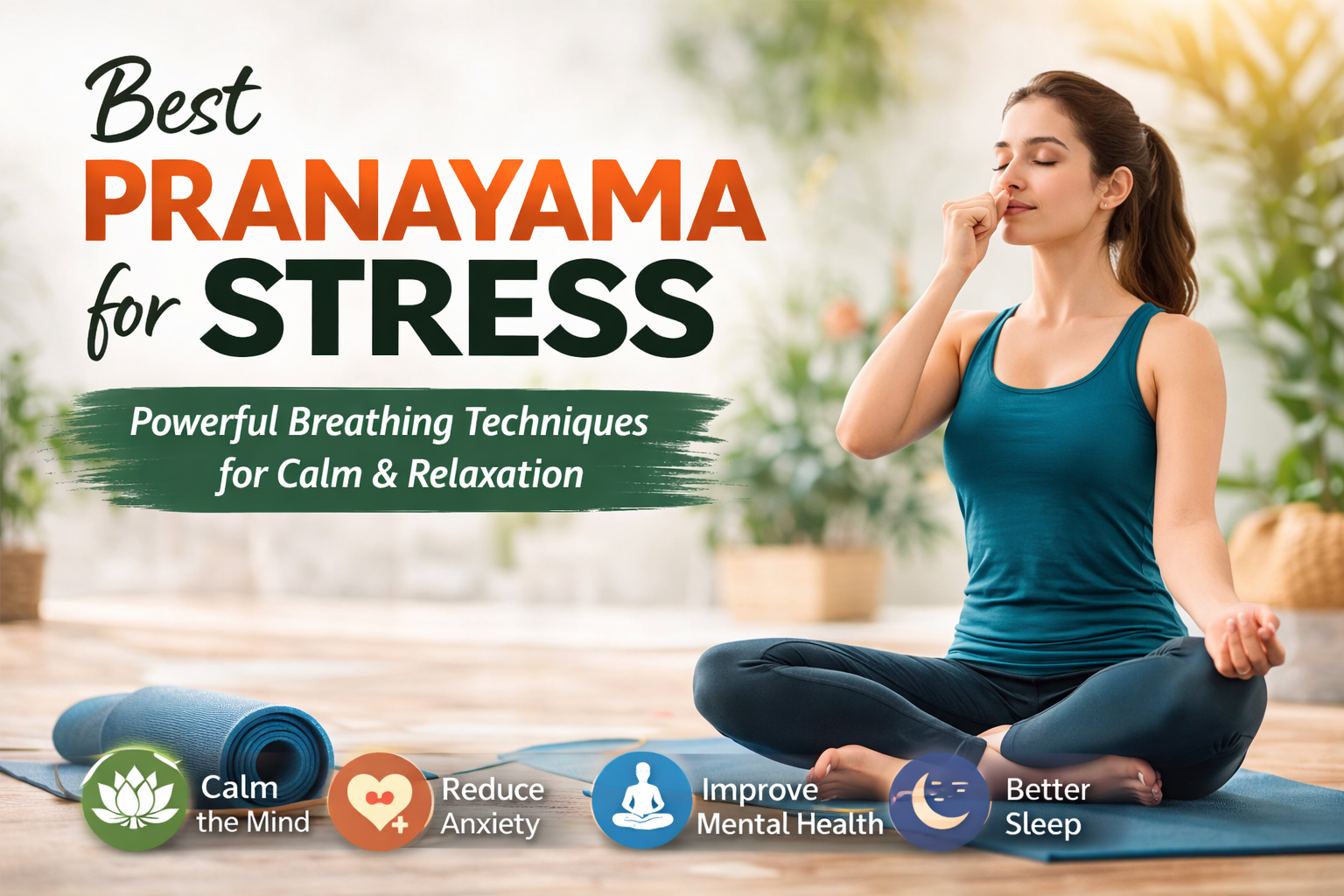
In today’s fast-paced world, stress has become a part of daily life. Work pressure, digital overload, lack of sleep, and unhealthy routines can lead to anxiety, mental fatigue, and emotional imbalance. One of the most natural and effective ways to reduce stress is pranayama, the ancient yogic practice of controlled breathing.
At PRANAFIT YOGA, we believe that the breath is the bridge between the body and the mind. Practicing pranayama regularly can calm the nervous system, improve oxygen flow, and bring deep mental relaxation.
This guide will help you understand the best pranayama techniques for stress relief and how they can transform your mental well-being.
What is Pranayama?
Pranayama is a Sanskrit word derived from two terms: “Prana”, meaning life force or energy, and “Ayama”, meaning expansion or control.
How Pranayama Works
Pranayama focuses on regulating breathing patterns to control the flow of energy in the body. When breathing becomes slow and controlled, the brain receives signals to relax, which helps reduce stress hormones.
Benefits of Pranayama for Stress
Regular pranayama practice provides several mental and physical benefits, including:
Reduces anxiety and mental tension
Improves oxygen supply to the brain
Calms the nervous system
Enhances focus and clarity
Improves sleep quality
At PRANAFIT YOGA, pranayama is an essential part of every yoga session to help individuals achieve complete mind-body balance.
Best Pranayama Techniques for Stress Relief
Here are some of the most effective breathing exercises recommended by PRANAFIT YOGA experts to reduce stress and promote relaxation.
1. Anulom Vilom Pranayama (Alternate Nostril Breathing)
What is Anulom Vilom?
Anulom Vilom is a powerful breathing technique where you inhale through one nostril and exhale through the other in an alternating pattern. This practice balances the left and right hemispheres of the brain.
Benefits for Stress
Reduces anxiety and tension
Improves concentration
Balances the nervous system
Enhances emotional stability
How to Practice
Sit comfortably in a cross-legged position.
Close your right nostril using your thumb.
Inhale slowly through the left nostril.
Close the left nostril and exhale through the right.
Repeat the process in reverse order.
Practice this for 5–10 minutes daily.
2. Bhramari Pranayama (Bee Breathing)
What is Bhramari?
Bhramari pranayama involves making a gentle humming sound like a bee while exhaling. The vibration produced helps calm the mind and relax the nervous system.
Benefits for Stress
Instantly calms the mind
Reduces anger and frustration
Improves mental focus
Relieves anxiety symptoms
How to Practice
Sit comfortably with eyes closed.
Place your index fingers on the cartilage of your ears.
Inhale deeply through the nose.
While exhaling, make a soft humming sound.
Repeat this 5–7 times for relaxation.
3. Nadi Shodhana Pranayama (Energy Channel Cleansing)
What is Nadi Shodhana?
Nadi Shodhana is a breathing practice that purifies the body’s energy channels and promotes mental clarity.
Benefits for Stress
Balances the nervous system
Reduces mental fatigue
Improves emotional stability
Enhances mindfulness
How to Practice
Sit comfortably with a straight spine.
Close the right nostril and inhale through the left.
Close the left nostril and exhale through the right.
Continue alternating for several cycles.
Practice for 10 minutes daily.
4. Sheetali Pranayama (Cooling Breath)
What is Sheetali?
Sheetali pranayama is known as the cooling breath technique. It helps calm the body and mind, making it especially effective during stress or anger.
Benefits for Stress
Reduces stress and tension
Lowers body temperature
Improves mental calmness
Reduces irritability
How to Practice
Sit comfortably in a relaxed posture.
Roll your tongue into a tube shape.
Inhale slowly through the rolled tongue.
Close your mouth and exhale through the nose.
Repeat for 5 minutes.
5. Deep Diaphragmatic Breathing
What is Deep Breathing?
Deep breathing focuses on slow inhalation and exhalation using the diaphragm. It is one of the simplest and most effective techniques for reducing stress.
Benefits for Stress
Slows the heart rate
Reduces cortisol levels
Promotes deep relaxation
Improves lung capacity
How to Practice
Sit or lie comfortably.
Place one hand on your abdomen.
Inhale slowly through the nose, expanding the belly.
Exhale gently through the mouth.
Practice for 10 minutes daily.
Tips to Practice Pranayama Effectively
To get the best results from pranayama, follow these simple tips recommended by PRANAFIT YOGA instructors:
Practice in a quiet and clean environment
Perform pranayama on an empty stomach
Maintain a straight spine while sitting
Start slowly and increase duration gradually
Combine pranayama with meditation and yoga
Consistency plays a key role in experiencing the full benefits of breathing exercises.
Why Choose PRANAFIT YOGA for Stress Relief?
At PRANAFIT YOGA, we offer professional yoga guidance to help individuals achieve physical and mental wellness. Our programs focus on holistic health through yoga, pranayama, and meditation techniques.
Our services include:
Personalized yoga sessions
Home yoga classes
Online yoga training
Stress management programs
Beginner-friendly pranayama practices
With expert instruction and a supportive environment, PRANAFIT YOGA helps individuals manage stress naturally and improve their overall quality of life.
Conclusion
Pranayama is one of the most powerful tools for managing stress and achieving mental peace. By practicing breathing techniques such as Anulom Vilom, Bhramari, Nadi Shodhana, Sheetali, and deep breathing, you can calm your mind, improve emotional balance, and enhance overall well-being.
With regular practice and guidance from PRANAFIT YOGA, you can transform stress into calmness and experience a healthier, happier life.